
Coping Is No Longer Enough
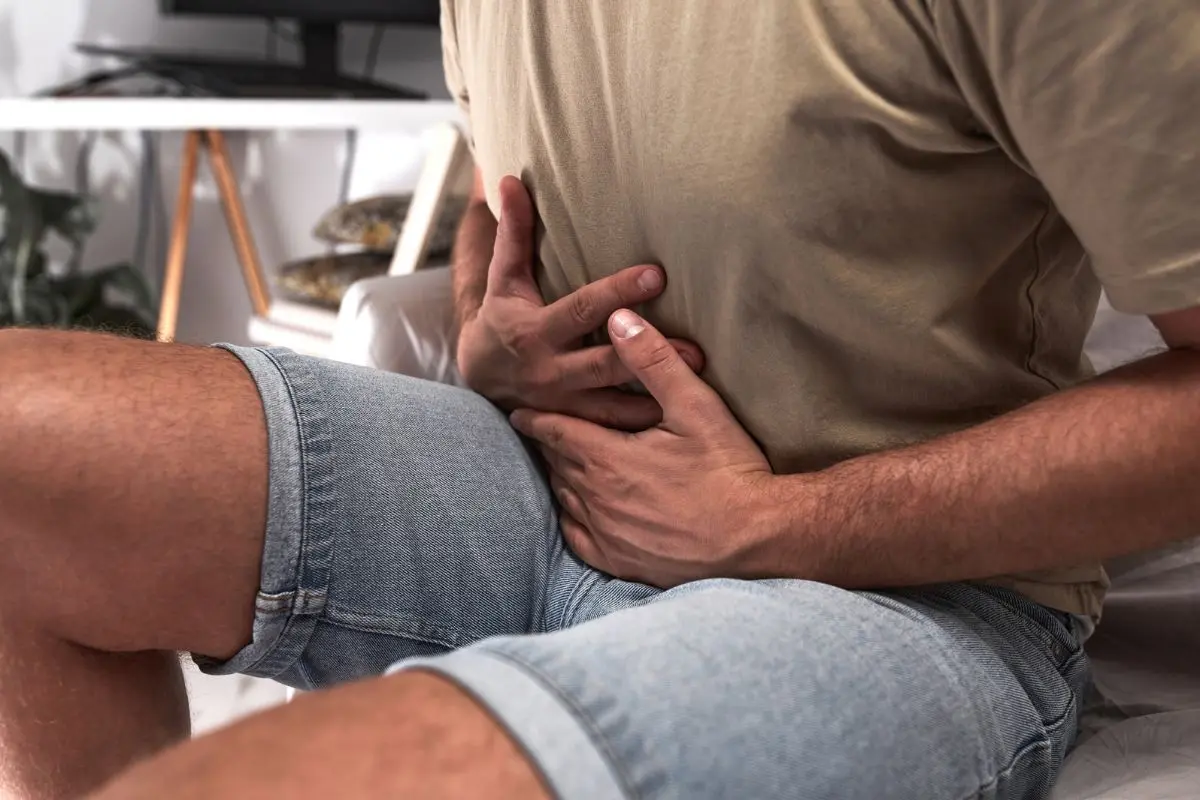
Movember is a month when men are encouraged to speak up about their health, and stress and gut symptoms in men deserve a place in that conversation. In my work, stress is one of the most common drivers of gut symptoms. Years of carrying work, money, and family pressure with no real break can leave the body on alert, with the gut often showing it first.
Many men cope by carrying all of it themselves, getting on with things and rarely opening up about what it’s costing them. That load can show up in the gut. It might look like urgency and planning around the nearest toilet, worrying that a meal will set off acid reflux, or skipping food to avoid pain during a working day. Living like that is exhausting, and a few small changes, from calming the stress response to how you eat, can make a noticeable difference. Speaking up early also makes it easier to spot the symptoms that need a proper check.
When Your Body Stays On Alert
Last month I wrote about how stress builds up in the body and what falling oestrogen does to the way the stress system reacts in perimenopause. [Read here: October post] Men have the same stress system, known as the HPA axis. It releases cortisol and adrenaline when something triggers the fight-or-flight response, and it should settle when the threat has passed.
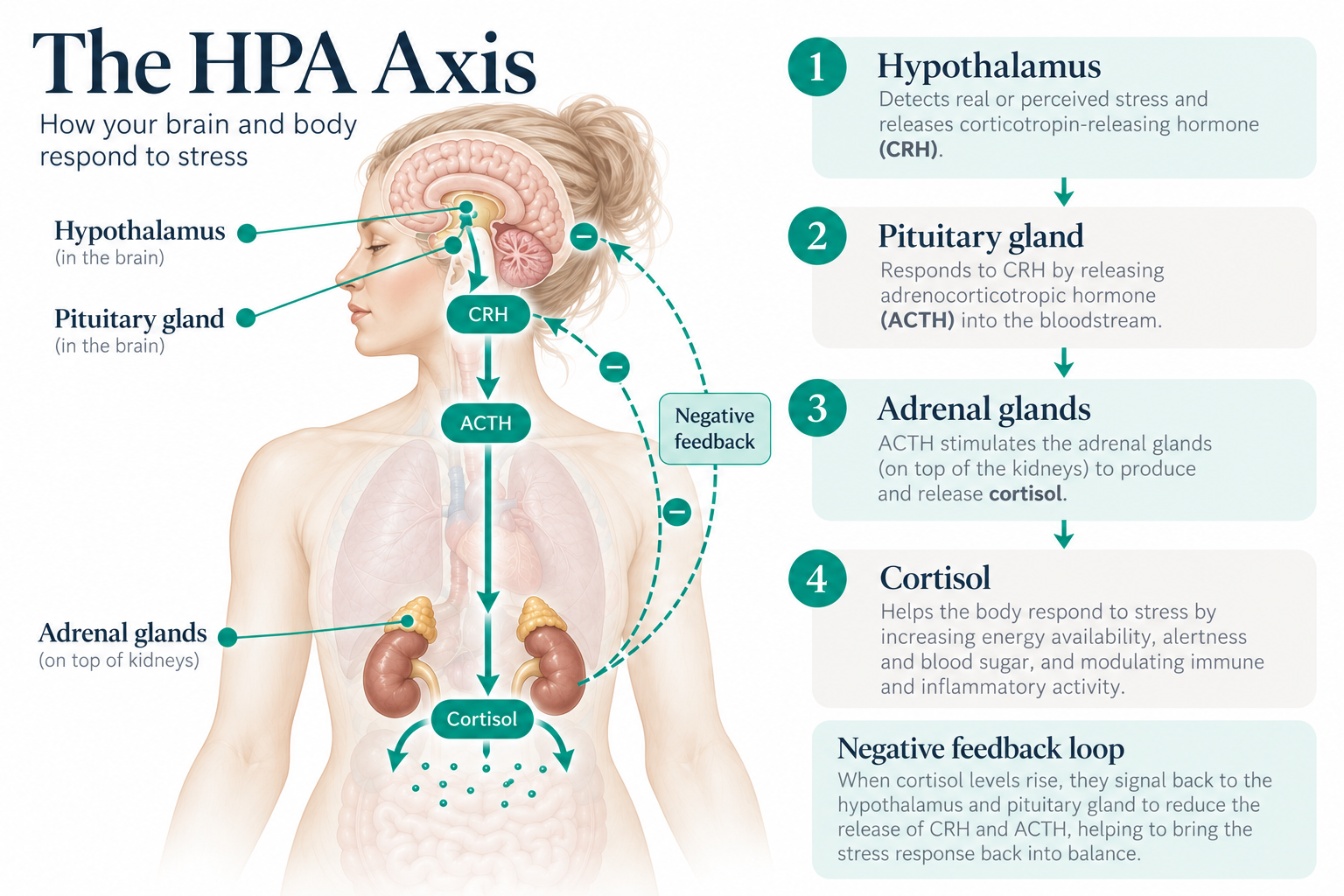
Work stress, money worries and family demands can act as triggers, and when they keep coming, the system may stay switched on. Many men describe it as being permanently on edge, under pressure, quick to react or anger, and unable to switch off. Over the years, that accumulated load has a name: allostatic load.1
Hormones are part of the picture for men too, though the pattern is different from what women go through in perimenopause and menopause. Testosterone declines gradually, by about 1% a year from around the age of 30 to 40.2 Midlife symptoms such as fatigue, low mood and a lower sex drive are often linked with lifestyle, mental health and high stress rather than a hormone deficiency alone, and stress may feed into the hormonal side as well. A recent review suggests that years of accumulated stress, known as allostatic load, may be linked with lower testosterone, indirectly, through changes in metabolism.3 So the stress load that keeps the gut on edge may also be feeding into the hormonal picture, which is one more reason to take it seriously.
We need stress to survive, so getting rid of it was never the goal. Reducing it where you can is worth doing, and managing it matters just as much. The goal is to get better at riding the wave when it arrives and standing down properly afterwards.
This Movember, speak up about your health.
That includes what’s going on in your gut.
Impact on the Gut
Your gut and brain talk to each other all the time, so when the stress response stays switched on, digestion can feel it. Stress can change how quickly food moves through and how sensitive the gut is to normal sensations, which is one reason a stomach can play up in the busiest stretch of the week even when you’ve eaten the same things as usual.4
Stress and gut symptoms frequently show up as bloating, heartburn and acid reflux in the men I work with, along with constipation and urgency. In my experience, symptoms tend to ease once stress is managed and eating habits improve. The research points the same way. In people who already have reflux, stress is linked with symptoms that feel stronger rather than with more episodes.5,6
Why So Many Men Say Nothing
By the time a man mentions a symptom, it has often been there a while. In interviews about bowel symptoms, men tended to put them down to something non-medical, held off when they came and went or settled with over-the-counter remedies, and worried about what a doctor might find.7 Embarrassment plays its part too. In a UK interview study of adults over 50, symptoms such as diarrhoea and rectal bleeding were too awkward to mention to most friends.8
Add a lifetime of being the one who copes, and asking for help can feel like admitting you can’t manage. Carrying that much for that long tends to show up somewhere in the body, and for plenty of men it’s the gut.
Why It's Worth Speaking Up
Some gut symptoms are just the body reacting to a stressful period, and some need checking. The NHS lists the following among the possible symptoms of bowel cancer9 and advises seeing a GP if you have any of them:
- A change in your poo that isn’t usual for you
- Needing to go more or less often than normal
- Blood in your poo or bleeding from your bottom
- Tummy pain or bloating
- Losing weight without trying
- Feeling very tired or short of breath.
If your poo is black or dark red, or you have bloody diarrhoea, ask for an urgent appointment or call NHS 111.
Getting a symptom checked early is sensible, and it gives you the best chance of catching anything serious while it’s easier to treat. It also helps to talk to someone who has been through it. I’ve lived with gut pain, diarrhoea and some properly embarrassing moments, and people tend to open up to me because there’s nothing to explain or apologise for. You don’t have to start with me, but if you’d like to, you can book a Gut Conversation, and we can talk it through. Either way, do start with someone.
Stop putting up with it in silence.
A few small shifts can help you feel better.
Small Shifts That Help The Gut Settle
When the stress response settles, the gut gets a chance to settle with it, which is why, with the men I work with, I look at how they eat before I look at what they eat. Eating regularly matters, because long gaps and rushed, irregular meals keep the body on alert while a steady routine signals that food is coming. When you do eat, stop to eat, sit down instead of eating on the move, and take two deep breaths before the first mouthful, which may help signal to your nervous system that it’s safe to digest. Then put the phone away and give the food your attention, chew properly, and notice what it tastes like. Savour it, because digestion starts in the mouth and a hurried meal puts extra strain on everything after it.
None of this involves buying anything or giving anything up, and in my experience, a few changes to how you eat can ease symptoms for a lot of people. You can use the same breathing at any point in the day, to stand down after work or before a difficult conversation. Breathe in through your nose for a count of four and out slowly for a count of six, and keep going for two minutes.
Having somewhere to talk
Breath and routine work on the body, but a load carried alone is still heavy, so the other half is having somewhere to talk. More groups for men are starting up, and it’s great to see. Here are a few groups local to West Sussex:
- Silver Bullet: Over 50s monthly meetup organised by Age UK. Meeting at The George Pub, Shoreham on the 1st Monday – 10.30-12.30 pm
- MenWalkTalk: gets men walking and talking together, and
- VS Life: runs group activities for men, encouraging them to Move, Explore and Connect.
Doing something side by side often makes it easier to talk, and being around other men doing the same thing may help the nervous system settle too.
At the sauna where I sometimes host a men’s group, a couple of men walked past while the group was getting ready for the cold, and one of them started shouting insults at them for what they were doing. I had to move them on. Reactions like that are exactly what puts men off seeking support, which is why these groups matter and why men keep turning up.
Give Yourself Permission
Men have been taught that coping quietly is the job, and a lot of them are still doing it, so consider this your permission to talk about what’s going on. Pick one of the groups above and go along once. Nobody will expect you to say anything the first time.
Photograph by Violeta Orlauskaite
References
- Guidi J, Lucente M, Sonino N, Fava GA. Allostatic Load and Its Impact on Health: A Systematic Review PubMed/Karger, 2021.
- NHS. Male menopause NHS, accessed October 2026.
- McGonagle E, Thomas J, Marrufo I, et al. The effect of stress on testosterone and sexual function International Journal of Impotence Research, 2026.
- Mayer EA, Ryu HJ, Bhatt RR. The neurobiology of irritable bowel syndrome Molecular Psychiatry, 2023.
- Fass R, Naliboff BD, Fass SS, et al. The Effect of Auditory Stress on Perception of Intraesophageal Acid in Patients With Gastroesophageal Reflux Disease Gastroenterology, 2008.
- Naliboff BD, Mayer M, Fass R, et al. The Effect of Life Stress on Symptoms of Heartburn Psychosomatic Medicine, 2004.
- Oberoi DV, Jiwa M, McManus A, Hodder R. Men’s Help-seeking Behavior with Regards to Lower Bowel Symptoms American Journal of Health Behavior, 2015.
- Adam R, Thornton AJ, Whitaker KL, et al. How does social context influence appraisal and help-seeking for potential cancer symptoms in adults aged 50 and over? A qualitative interview study European Journal of Cancer Care, 2022.
- NHS. Symptoms of bowel cancer NHS, accessed October 2026.
Jungle-Trained. Science-Informed.
Photograph by Violeta Orlauskaite
Nikkie Windsor UKIHCA-RHC
Integrated Nutritionist & Breath Coach
Gut issues stealing your freedom? I help mid-life adults get to the root of unpredictable digestion, stress-driven symptoms, and low energy — through nutrition, nervous system regulation, and breathwork.
I live with Crohn’s disease, so I know what it means to plan your life around your gut. And I know what it takes to stop.
Book a free Gut Conversation to explore your symptoms and map out your next steps.
Photograph by Violeta Orlauskaite
Nikkie Windsor UKIHCA-RHC
Nutritionist, Health Coach & Breathwork Facilitator
Jungle-Trained. Science-Informed.
I help people navigating midlife move from gut chaos, low energy and overwhelm to steady digestion, resilient energy and confidence in their bodies again.
Book a personalised strategy call to explore your gut symptoms, energy and stress patterns — and map out your next steps.
Are You Ready to Change Your Gut Story?
You don’t have to manage this alone. Take the first step to feeling better today.