
A Kitchen Full of Jars
I made my first jar of sauerkraut in a jungle kitchen in Costa Rica, nearly fifteen years ago, with patchy internet for guidance and even less idea of what I was doing. It became a genuine exploration of fermented foods, gut health and cooking ferments — with jars bubbling on every surface within months, kefir grains multiplying faster than I could use them, and kombucha scobies stacked three deep. Everything grew from there. Literally.
Ferments are a responsibility, especially in a hot country. There were kefir babies to feed, ginger bugs to check, and jars to taste, adjust, and taste again. Anything from the garden or the farmers market became fair game. I had very few fails — mostly because I paid attention to what the jars were telling me.
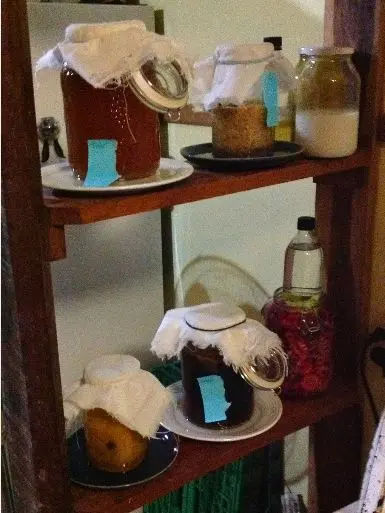
My first ferments in the jungle
One day I was on a minibus to the capital with a group of holistic practitioners and herbalists, heading to a conference, and the conversation turned to my new obsession. Everyone wanted to know more. Some wanted to buy. By the end of that bus ride, I had the beginnings of a market stall — and the remote surf village I called home got its first proper introduction to fermented food.
That stall became a business. I ran it for six years, selling a range of fermented foods from sauerkraut and kimchi to hot sauces and yoghurt, and a range of grain-free and gluten-free snacks for people with food sensitivities – the same problem a lot of my clients bring me today.
Why I Initially Started Fermenting
The real reason wasn’t the taste, though that came fast. It was Crohn’s disease, and the fact that I was living a long way from conventional medicine and needed to understand what I could actually influence.
If you’ve dealt with gut issues — bloating that won’t settle, discomfort after meals, a digestive system that seems to have its own agenda — you’ll know how much energy goes into just trying to make sense of it. That search is what led me to the microbiome, and to the idea of gut diversity specifically.
The gut isn’t one thing. It’s an ecosystem — thousands of species of bacteria, in relationship with each other and with you. Living in the jungle made that easier to understand, not harder. A rainforest thrives on diversity. Strip that back to a few dominant species and the whole system loses resilience. Your gut works the same way.
If any of this sounds familiar — the symptoms, the sense that something’s off even when tests come back clear — that’s exactly what a Gut Conversation is for. It’s free, thirty minutes, and the starting point for actually understanding what’s going on rather than guessing at it.
A market stall in the jungle
Six years – more jars than I could count
What Fermentation Does to Food
For years I believed the whole benefit of fermented food lived in the live microbes — which is why I’d always tell people: buy it from the fridge, never the shelf. If it’s sitting at ambient temperature, it’s been pasteurised, and whatever benefit it had was gone.
I now know that isn’t the case.
Fermentation changes food before it ever reaches you. The microbes doing the work don’t just survive in the jar — they transform what’s in it. Fibres break down. Nutrients that were locked up become easier for your body to access. Compounds form that didn’t exist in the raw ingredient at all. Some of these are called postbiotics — the beneficial byproducts of fermentation, distinct from the live bacteria themselves. And crucially, many of these benefits remain even once the microbes are gone.
This is why coffee, chocolate, bread and alcohol all owe their existence to fermentation, despite none of them containing live cultures by the time you consume them. The microbes did their work during production—breaking down compounds, developing flavour, changing texture—then disappeared during the rest of the process. The transformation is what mattered, not the survivors.
Gut Health and Cooking with Ferments
Does Heat Undo The Benefits?
Once I understood that the benefits of fermenting went beyond the live microbes, cooking with ferments stopped feeling like sacrilege.
For years I’d said never to cook a ferment—that heating it undid the whole thing and killed off everything worth having. I don’t believe that anymore. It’s a myth—one that stops people from taking full advantage of what fermented food can do and missing out on some genuinely great dishes along the way.
Kimchi gets stirred into stews all over Korea. Sourdough is baked, not eaten raw. Tempeh is fried, steamed, roasted — not eaten straight out of the mould.
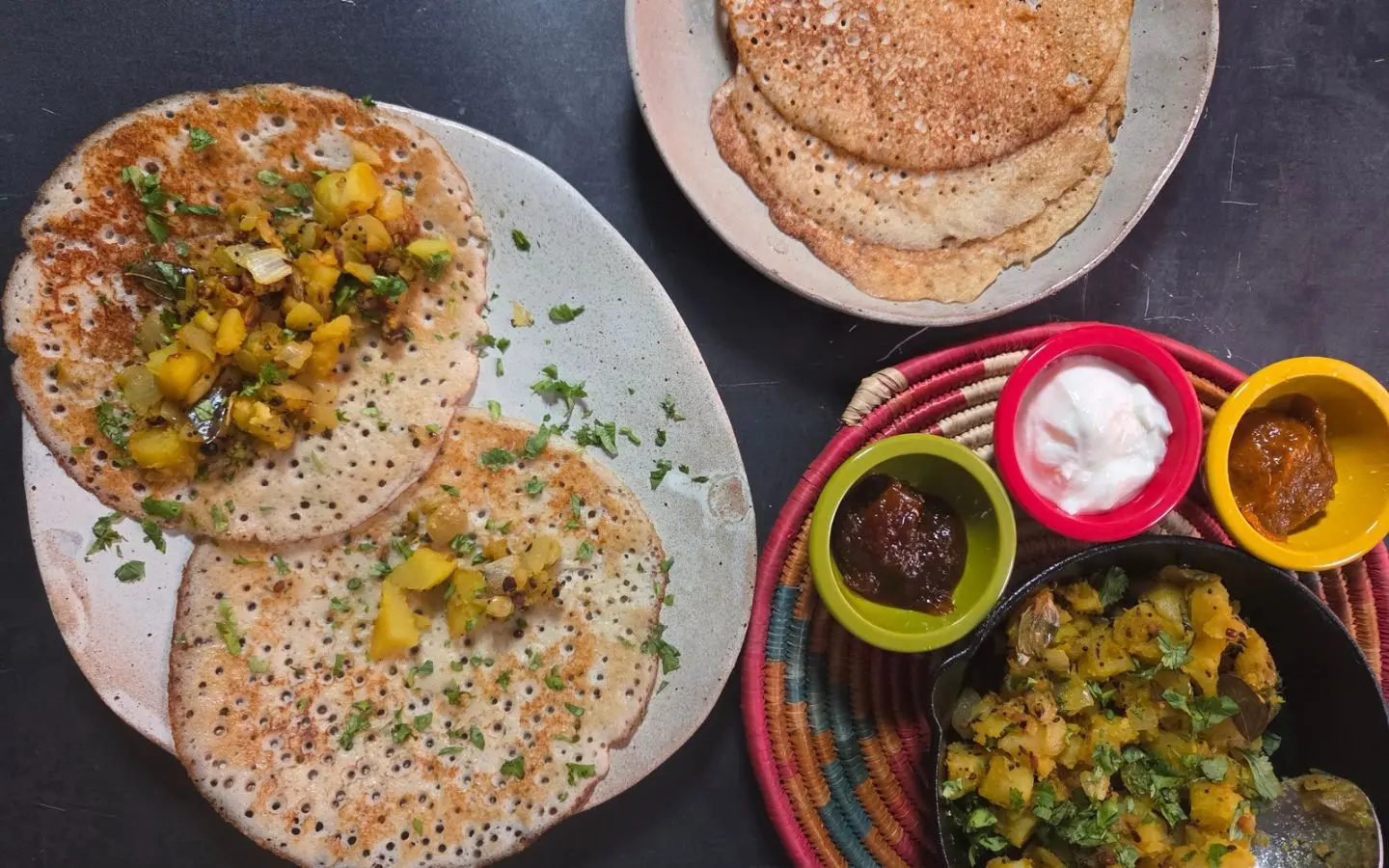
It’s not one or the other, either. Cooked and fermented sit together on the same plate all the time — dosa is traditionally served with a fermented coconut chutney, cooked and fermented, both benefiting the gut.
Cooking a ferment doesn’t erase what fermentation already did — the fibres are still broken down, and the nutrients are still more available than in the raw ingredient. What’s lost is the live culture. What’s kept is everything fermentation already changed.
Fermented and cooked
The microbes may die, but the benefits they left behind don’t
From The Jar to The Plate
If you want to try this yourself, skip sauerkraut for your first attempt and try dosa. It is easy, takes only 2-3 days, and is a great introduction to what fermentation actually does.
Dosa is a fermented rice-and-lentil batter, traditionally cooked into a thin, crisp pancake. Soak the rice and lentils, blend with water, leave the batter out to ferment for a day or so until it turns tangy and slightly bubbly, then cook it like a crepe on a hot pan.
Fermentation does valuable work before you even switch on the hob—breaking down complex food molecules into simpler, more digestible compounds while increasing the availability of essential nutrients.
Here is the recipe. Give it a go!
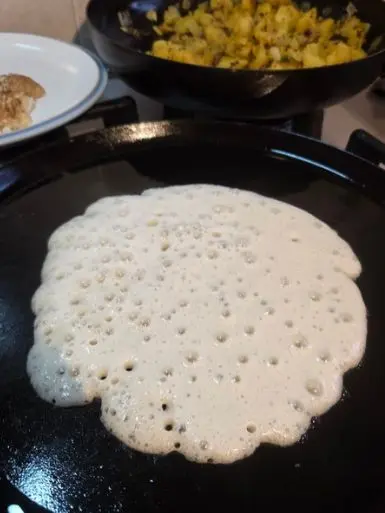
Simple Fermented Dosa
Equipment
- 2 Jars
- Blender
Ingredients
- 400 g Rice Any variety but white basmati is the most common
- 200 g Urad dal (white lentils) Any variety may be used
- 1 tbsp Fenugreek seeds (optional)
- 50 g Chana dal (optional)
- 2 tsp Salt
- 4 tbsp ghee, butter, or oil For cooking
Instructions
- Rinse the rice and place in a bowl or jar, covered with water. In a separate bowl, add the lentils, fenugreek seeds and channa dal (if using), and cover with water. Both should have about 1cm of water above the ingredients. Cover and leave to soak for 8–10 hours.
- Drain the rice, discarding the soaking water. Add the rice, the lentil mixture, its soaking water and the salt to a blender, and blend to a smooth, thin batter. Add more water if needed.
- Transfer to a jar with plenty of room for the batter to rise. Cover the mouth with fabric secured by a rubber band, and leave at room temperature to ferment for 12–72 hours. The batter should rise significantly.
- After fermenting, stir the batter and add more water if needed — the consistency should be thin enough to spread easily across the pan.
- Heat a heavy-bottomed pan (cast iron or a pancake pan) over medium heat. Add a little butter, ghee or oil, then pour a ladleful of batter into the centre and spread it thin. Cook until the edges lift and the base is golden, then flip briefly, fold, and serve.
Notes
If you want to go beyond one jar of dosa batter, I run a private fermentation workshop — in person or online — where we cover the basics properly: what to make, how to trust the process, and how to build it into a rhythm rather than a one-off experiment.
I’ll be talking about cooking with ferments at the Big Retreat Festival this year too — if you’re there, come find me.
Fifteen years on, I still can’t walk past a farmers’ market without wondering what would ferment well. Some habits are worth keeping.
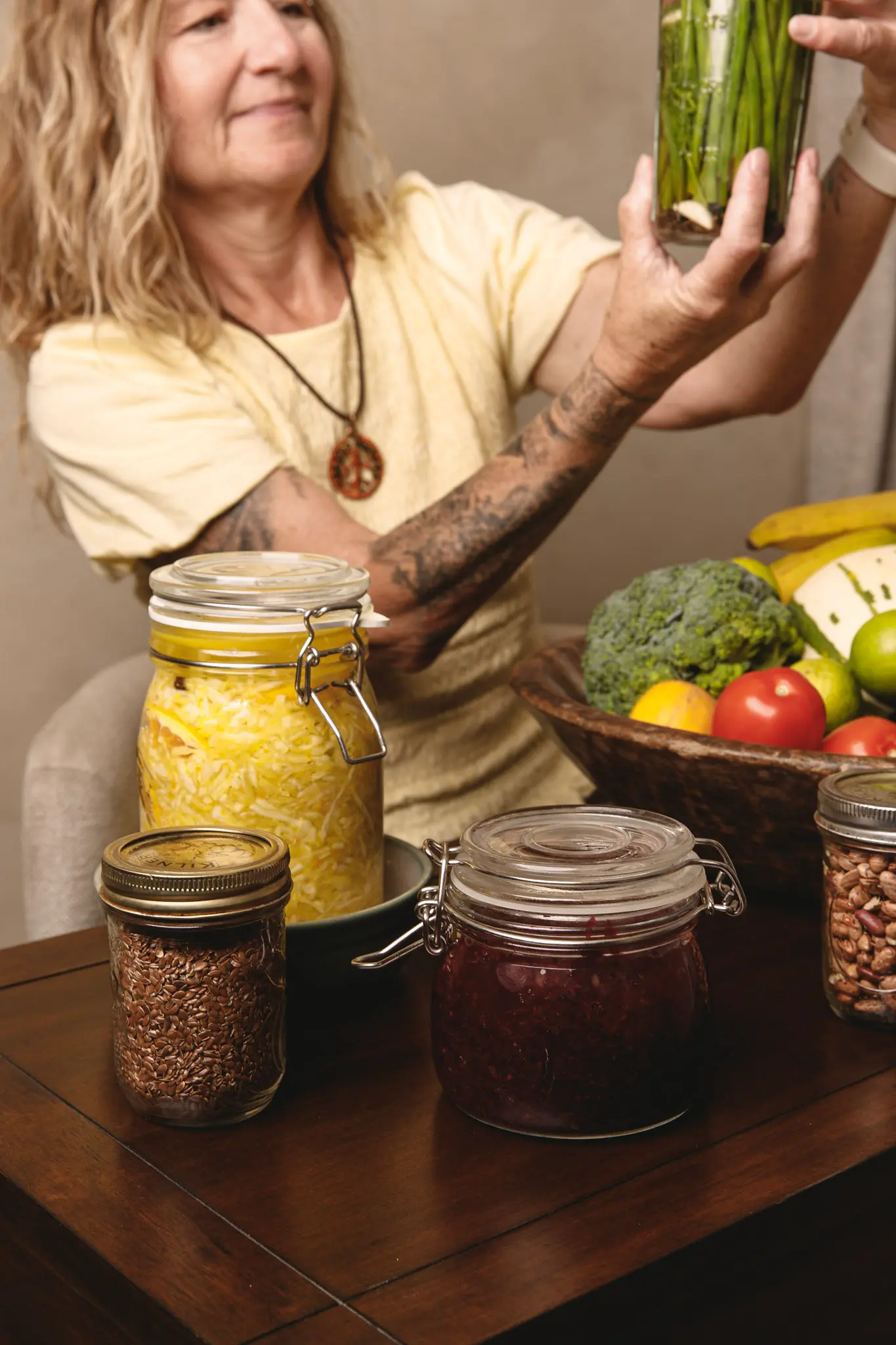
Photograph by Violeta Orlauskaite
Jungle-Trained. Science-Informed.
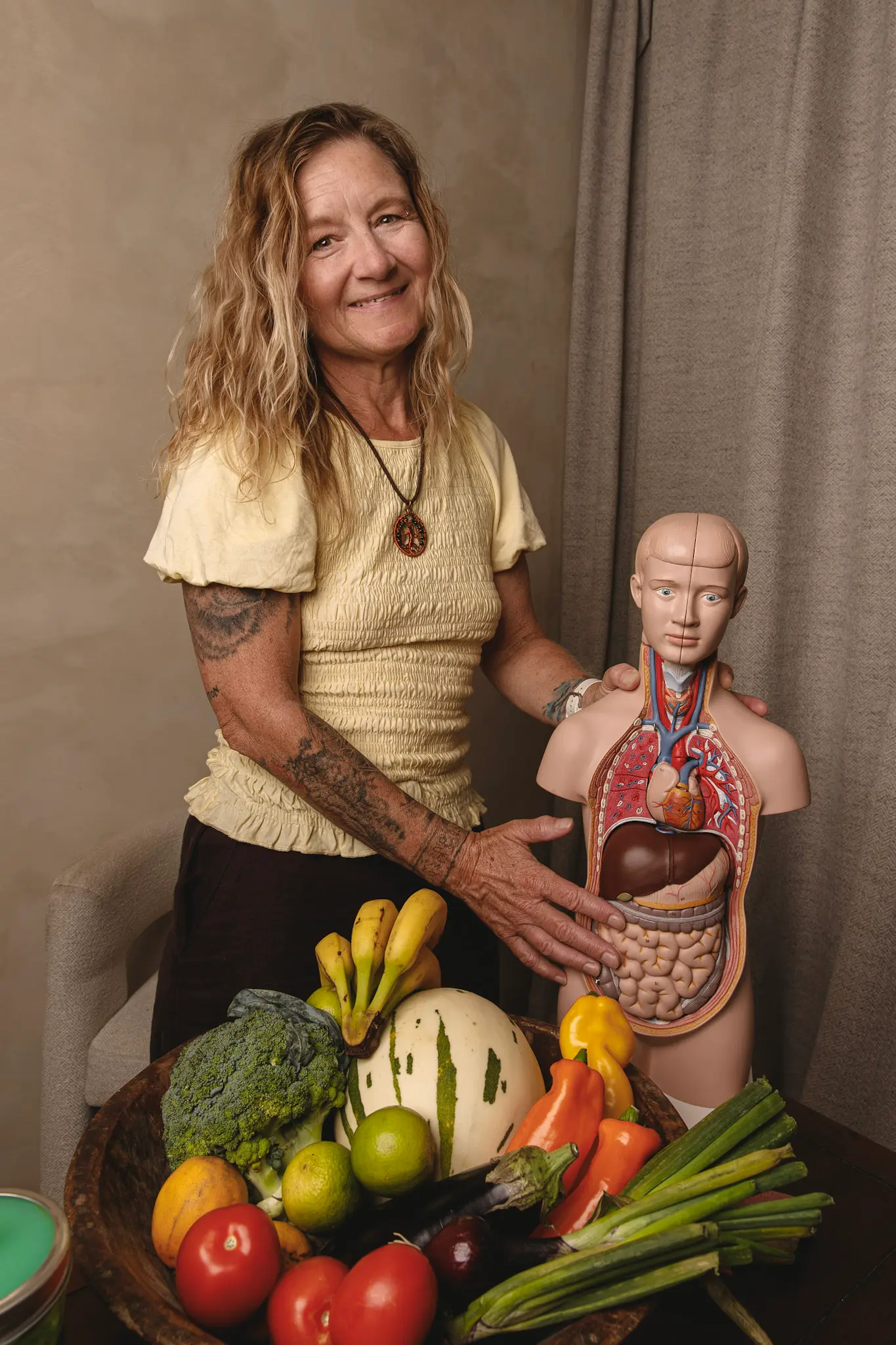
Photograph by Violeta Orlauskaite
Nikkie Windsor UKIHCA-RHC
Integrated Nutritionist & Breath Coach
Gut issues stealing your freedom? I help mid-life adults get to the root of unpredictable digestion, stress-driven symptoms, and low energy — through nutrition, nervous system regulation, and breathwork.
I live with Crohn’s disease, so I know what it means to plan your life around your gut. And I know what it takes to stop.
Book a free Gut Conversation to explore your symptoms and map out your next steps.
Photograph by Violeta Orlauskaite
Nikkie Windsor UKIHCA-RHC
Nutritionist, Health Coach & Breathwork Facilitator
Jungle-Trained. Science-Informed.
I help people navigating midlife move from gut chaos, low energy and overwhelm to steady digestion, resilient energy and confidence in their bodies again.
Book a personalised strategy call to explore your gut symptoms, energy and stress patterns — and map out your next steps.
Are You Ready to Change Your Gut Story?
You don’t have to manage this alone. Take the first step to feeling better today.