The Power of Rhythm
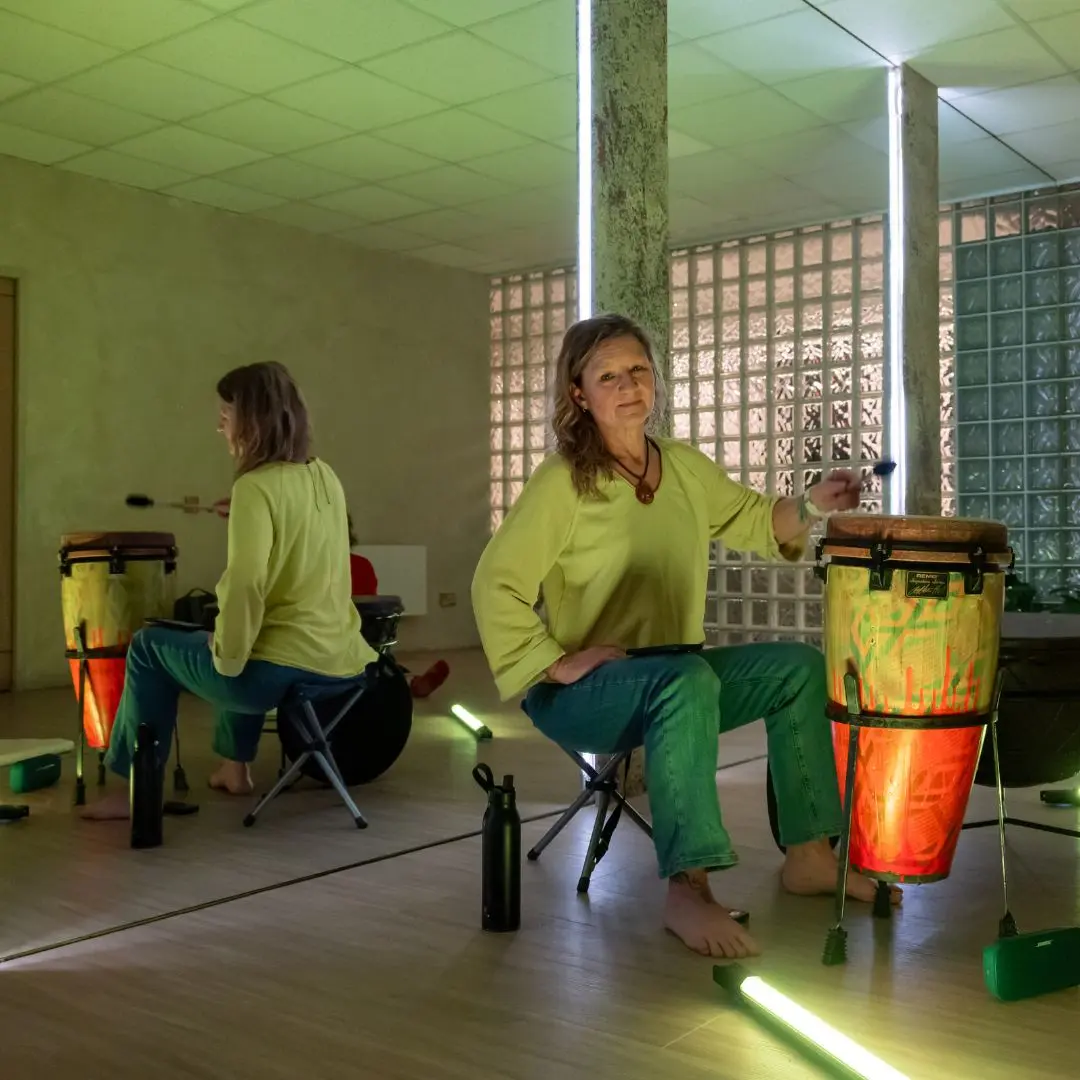
When people hear that I use drumming in my breathwork classes, they’re often curious — sometimes surprised.
There’s an intention behind it.
Drumming is an ancient practice, and in my classes, it’s used deliberately as a structured way to support nervous system regulation.
Rhythm is neurological. It’s one of the most powerful regulatory tools we have, and it’s built into the body.
Before we talk about breath, vagus nerve, or stress physiology, it helps to understand this:
The body is rhythmic by design.
When stress disrupts rhythm, the body feels it.
Restoring rhythm restores stability.
The Body Is Rhythmic By Design
Your heart beats in rhythm.
Your breath moves in rhythm.
Your digestive system contracts in rhythmic waves.
Your sleep follows a circadian rhythm.
Health depends on coordinated timing.
Stress disrupts rhythm.
When the nervous system is under prolonged pressure, internal rhythms become less coherent. Breathing becomes shallow. Heart rate variability reduces. Digestion feels erratic. Sleep fragments.
Regulation is, in many ways, the restoration of rhythm.
What Happens When We Add External Rhythm
The human nervous system has a natural tendency toward entrainment — the process by which biological rhythms synchronise with external cues.
Research in rhythmic auditory stimulation shows that steady external beats can influence neural timing, attention, and autonomic regulation.
When breathing is guided by a consistent rhythm — rather than internal counting — the body has something stable to synchronise with.
Instead of “trying to breathe correctly,” you begin to follow.
That shift alone reduces cognitive load.
And reduced cognitive load supports regulation.
You See This In Music.
You See It In Movement.
You even see it in how people unconsciously match pace when walking together.
What Happens When We Add External Rhythm
The human nervous system has a natural tendency toward entrainment — the process by which biological rhythms synchronise with external cues.
You See This In Music.
You See It In Movement.
You even see it in how people unconsciously match pace when walking together.
Research in rhythmic auditory stimulation shows that steady external beats can influence neural timing, attention, and autonomic regulation.
When breathing is guided by a consistent rhythm — rather than internal counting — the body has something stable to synchronise with.
Instead of “trying to breathe correctly,” you begin to follow.
That shift alone reduces cognitive load.
And reduced cognitive load supports regulation.
Why Rhythm Helps Anxious Minds
Many people who struggle with anxiety find silent breath counting difficult.
The mind wanders.
The counting becomes effortful.
There’s a subtle pressure to “do it right.”
Rhythm removes that layer.
The beat becomes the anchor.
Predictability is calming to the nervous system. Repetition signals safety. A steady tempo provides structure for a system that may feel internally chaotic.
You don’t have to think your way into regulation.
You can synchronise your way into it.
Rhythm gives the nervous system something steady to follow.
When the beat is predictable, the body begins to settle.
The Science Behind It
Slow, paced breathing — particularly around five to six breaths per minute — has been shown to increase heart rate variability and stress recovery. When rhythm guides the breath, it becomes easier to access that steady pacing.
Emerging research suggests that group drumming may reduce stress markers such as cortisol while improving mood and immune parameters.¹
Repetitive rhythmic sound has also been shown to increase alpha brainwave activity — a state associated with relaxed alertness.²
In addition, low-frequency vibration is detected by mechanoreceptors in the skin and connective tissue, providing sensory input that can support parasympathetic activation.³ While research is still evolving, the consistent theme is that predictable rhythm and vibration influence autonomic regulation.
The mechanisms are still being explored. But what is clear is this:
Predictable rhythm influences the nervous system.
And what influences the nervous system also influences digestion, inflammation, and resilience.
Why I Use Drumming in Class
In my classes, the drum provides a steady external rhythm that guides the breath.
It removes the need for mental effort.
It creates coherence between breath and body.
It supports people who struggle to settle through silence alone.
The rhythm is not loud. It’s not performative. It’s structured and intentional.
Over time, participants often notice that their breathing begins to regulate more easily — even without the drum.
That’s the goal.
The rhythm trains the system.
Eventually, the body remembers.

Regulation Isn’t Always Quiet
There’s a misconception that nervous system work must be still and silent.
In reality, regulation is about flexibility.
Sometimes that means slowing down.
Sometimes it means stabilising.
Sometimes it means gently activating.
Rhythm allows us to access those states with structure and safety.
It’s one of the most ancient tools humans have used to organise the nervous system — long before we had language for vagal tone or HRV.
Experiencing It Is Different From Reading About It
You don’t need to understand the neuroscience to feel the shift.
When breath and rhythm align, the body often settles in a way that feels grounded rather than forced.
And for those navigating stress-sensitive gut symptoms, that steadiness can make a meaningful difference.
If you’re curious, Restore Calm classes run regularly in Brighton and Worthing.
Come and experience it.
References
- Bittman, B. B., Berk, L. S., Shannon, M., Sharaf, M., Westengard, J., Guegler, K. J., & Ruff, D. W. (2001). Recreational music-making modulates neuroendocrine and immune parameters in normal subjects. Alternative Therapies in Health and Medicine.
- Maxfield, M. C. (1990). Effects of rhythmic drumming on EEG activity. Dissertation Abstracts International.
- Thayer, J. F., & Lane, R. D. (2000). A model of neurovisceral integration in emotion regulation and dysregulation. Journal of Affective Disorders.
Your Gut-Brain-Breath Guide

Nikkie Windsor UKIHCA-RHC
Integrated Nutritionist & Breath Coach
Jungle-Trained. Science-Informed.
I help people navigating midlife move from gut chaos, low energy, and overwhelm to steady digestion, resilient energy and confidence in their bodies again.
Book a personalised strategy call to explore your gut symptoms, energy and stress patterns — and map out your next steps.
Nikkie Windsor UKIHCA-RHC
Nutritionist, Health Coach & Breathwork Facilitator
Jungle-Trained. Science-Informed.
I help people navigating midlife move from gut chaos, low energy and overwhelm to steady digestion, resilient energy and confidence in their bodies again.
Book a personalised strategy call to explore your gut symptoms, energy and stress patterns — and map out your next steps.
Ready to Restore Calm?
Take the next step toward steady digestion, balanced energy, and a calmer nervous system.