

Not All Reactions Are Food-Related
A client came to see me asking why she seemed to react to certain foods more than she used to. She was struggling with bloating and discomfort – the usual suspects that make me think of dysbiosis, a bacterial imbalance that I unpacked in Why Your Gut Symptoms Keep Coming Back.
But as I dig a bit deeper, I learn that she has skin issues and has been living with eczema for many years. The flare-ups come and go, but never completely. Another clue that points me to the integrity of the gut barrier and I’m wondering whether the immune system is part of the picture.
My client has been doing her research and has read that excluding gluten and dairy might help with her symptoms. It appeared to help, but the results are inconsistent, so she wants to know if excluding more foods is the right way to go. Interestingly, when I ask how her symptoms were on her last holiday, she can’t recall them being a problem. Great! Another clue that leads me to the nervous system, and the level of stress in my client’s life.
Because here’s the thing most people don’t know: your gut wall is one cell thick. And sixty to seventy percent of your immune system sits right behind it[1]. If there’s a problem with the integrity of that wall, there’s a good chance the immune system is being drawn into it too.
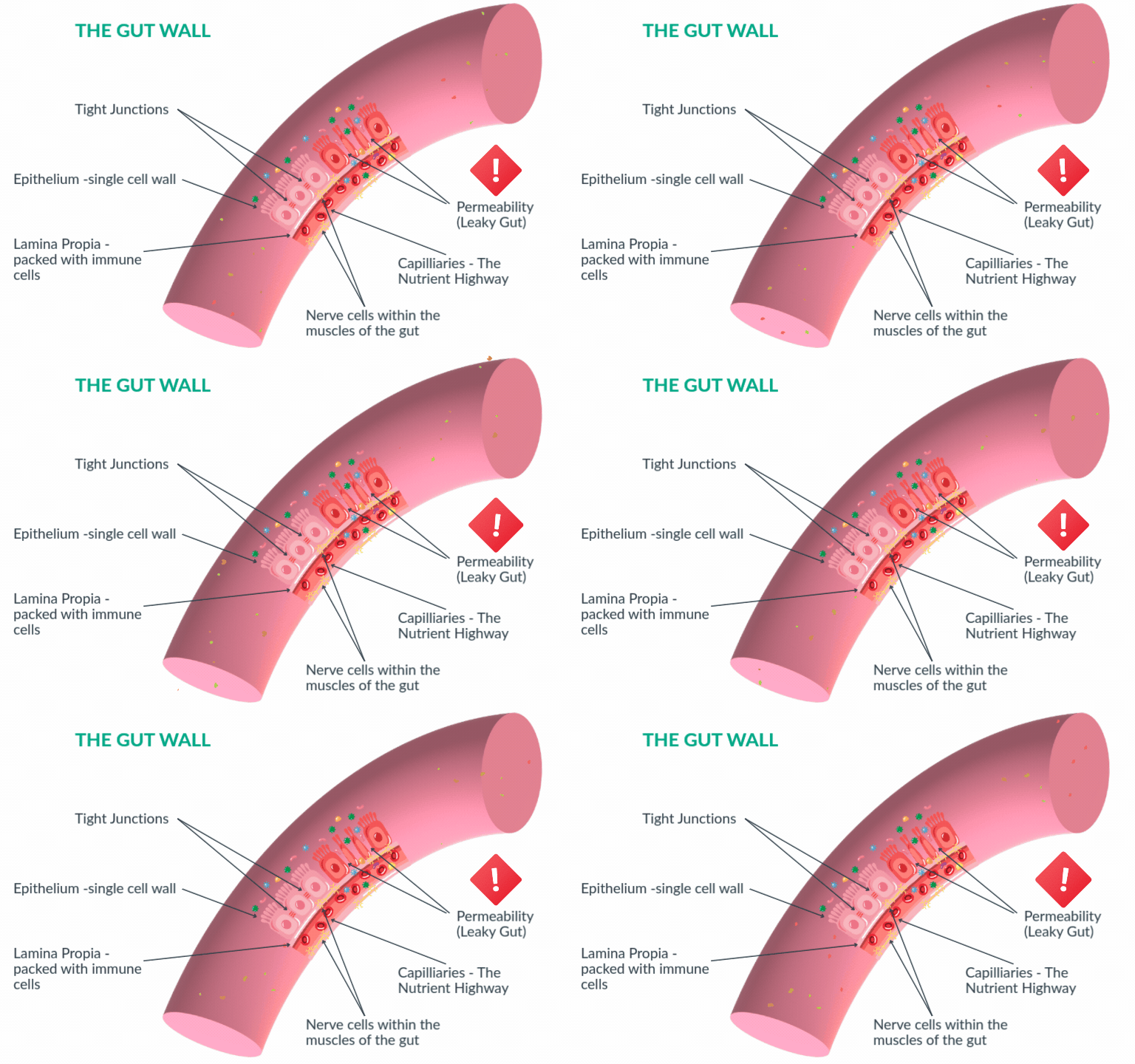
The nervous system isn’t separate from any of this, either. The gut wall itself is home to the enteric nervous system — sometimes called the body’s second brain — in constant, direct conversation with the rest of your nervous system[2]. When stress runs high, that conversation changes, and it’s part of why what’s happening in someone’s life can show up as clearly in the gut wall as anything they’re eating.
The River That Filters as it Flows
Picture your gut as a tube running straight through your body. Anything inside that tube is technically still outside you. It only becomes part of you once it crosses the wall.
Think of that wall as a riverbank — a river running through a landscape, filtering as it flows. Clean water seeps steadily through the banks into the ground on either side, nourishing everything around it, while silt and debris get held back. That filtering never stops. It’s happening the whole time the river is moving, same as digestion happening the whole time food is moving through you.
The banks themselves are held together by what we call tight junctions[3]. I sometimes lock my fingers together to show clients what that looks like — cells knitted tightly to each other, sealing the gaps. But health conditions, chronic stress, alcohol, certain medications and an imbalanced microbiome can all erode those banks over time. My fingers come apart, gaps appear — and once the banks erode, they stop filtering properly. Silt and debris that should have been held back start spilling out into the surrounding land along with the water.
This is what most people know as leaky gut — and it’s a fair description. The banks that are supposed to filter what passes through have developed gaps, and what gets through can end up somewhere it was never meant to be.
When the gut barrier weakens
The damage can be far reaching.
Why You React to Certain Foods
And why it isn't always the food
Once that barrier is compromised, whatever’s leaking through lands directly on the immune system sitting behind it. That’s why gut barrier problems so often show up somewhere else entirely — itchy skin, eczema, hives appearing with no obvious cause. The gut is one cell thick. It doesn’t take much for what’s happening there to be felt everywhere else.
Histamine is often part of that picture too — it’s one of the first things I explore when reactive symptoms like these show up. It’s a big enough topic to deserve its own post, so I won’t go into it here, but it’s worth knowing it’s on the list of things I’m looking at.
Chronic stress plays a bigger role here than most people realise. High cortisol affects digestive function directly — it affects the mucosal layer that protects the gut wall, slows enzyme production, and disrupts the microbes that support the lining itself[4]. Certain species, commensal bacteria among them, exist specifically to protect that wall. When stress runs high for long enough, the wall, the microbiome and the immune system all end up affected together.
This is why gut barrier issues turn up more in people with autoimmune diseases like Crohn’s, colitis or coeliac, but also in anyone carrying chronic stress, consuming excess alcohol or taking medications like NSAIDs that can affect the gut lining directly[5]. It’s rarely just one thing.
I know this side of it personally, too. I’ve lived with Crohn’s since I was fifteen, and years of active inflammation have caused real damage to my own gut lining — including the removal of the last twelve inches of my small intestine. Nutrient deficiencies, impaired digestion, having to relearn what my body actually needed — barrier integrity is an ongoing concern for me. It’s part of why I take it seriously with every client, not just the ones with a diagnosis like mine.
What Actually Helps
Repair isn’t a quick add-on — it’s part of the same root-cause work I do with every client, built on the 4R framework. Remove what’s triggering the reaction. Replace what’s missing — often digestive enzymes, sometimes through food, sometimes through how someone eats, since digestion is as much about how you eat as what you eat. Reinoculate with fermented foods and a genuinely diverse range of plant fibre — thirty plant foods a week is a good target I point clients toward.
Alongside that, specific nutrients can support the wall itself while the rest of the work happens — marshmallow root, slippery elm, aloe vera, glutamine, targeted probiotics. And sleep matters more than people expect; a lot of valuable gut repair happens overnight.
None of it works in isolation from the nervous system, though. Stress is often the trigger holding everything else in place, so I bring in breathwork to help someone’s body genuinely register that it’s safe to digest — routine, eating without a screen, a few breaths before a meal. Small, consistent signals, repeated.
Gut barrier integrity is one layer of a bigger picture — sitting alongside the microbiome, the nervous system and the root cause underneath it all. If you’re still asking why you react to certain foods and nothing quite explains it, that’s exactly the kind of picture worth unpicking together. Book a free Gut Conversation.
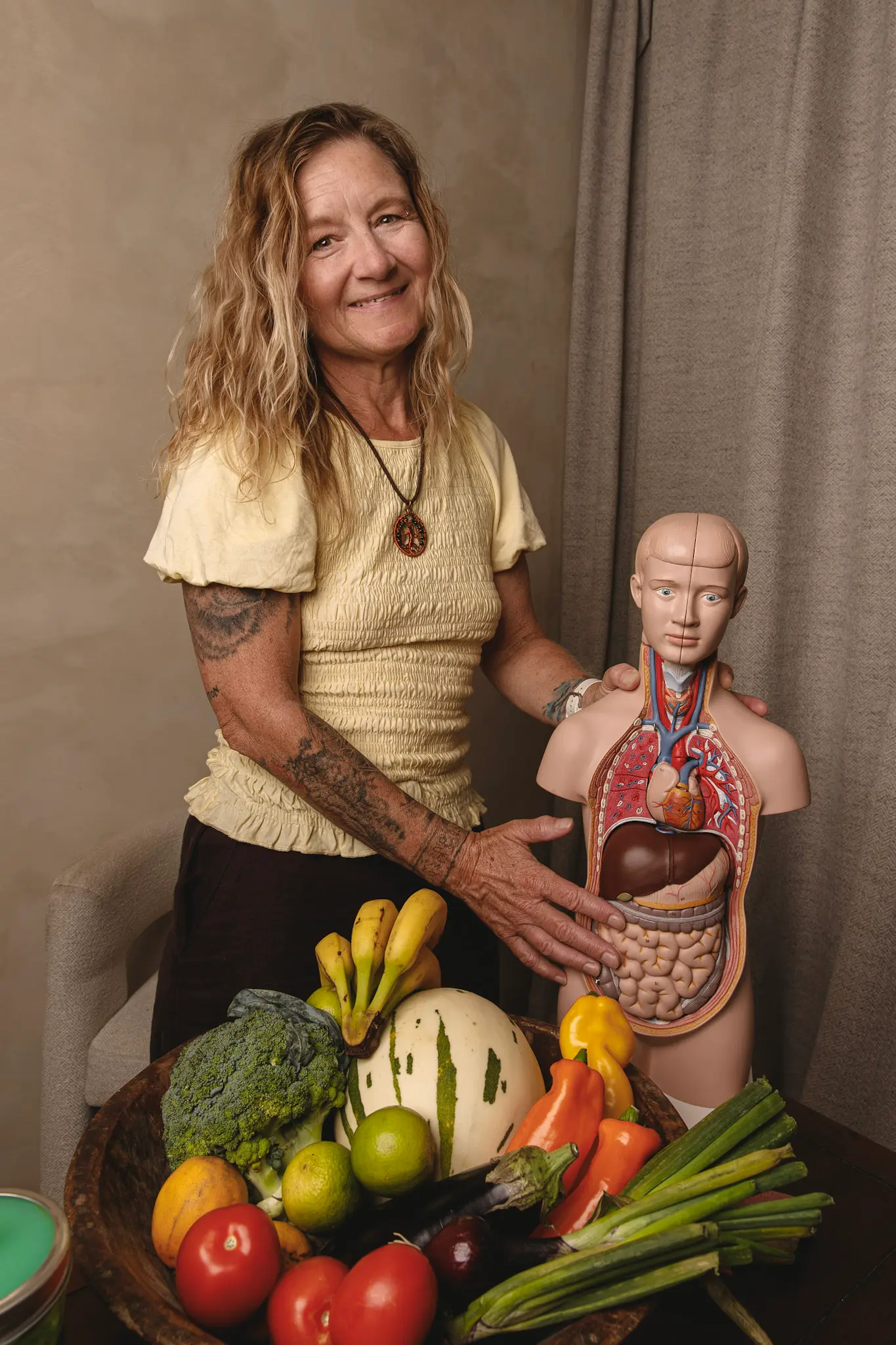
Photograph by Violeta Orlauskaite
References
- Vighi G, Marcucci F, Sensi L, et al. Allergy and the gastrointestinal system. Clinical & Experimental Immunology.
- Carabotti M, Scirocco A, Maselli MA, Severi C. The gut-brain axis: interactions between enteric microbiota, central and enteric nervous systems. Annals of Gastroenterology.
- Fasano A. Zonulin and its regulation of intestinal barrier function: the biological door to inflammation, autoimmunity, and cancer. Physiological Reviews.
- Molotla-Torres DE, Guzmán-Mejía F, Godínez-Victoria M, Drago-Serrano ME. Role of stress on driving the intestinal paracellular permeability. Current Issues in Molecular Biology.
- Bjarnason I, Scarpignato C, Holmgren E, et al. Mechanisms of damage to the gastrointestinal tract from nonsteroidal anti-inflammatory drugs. Gastroenterology.
Jungle-Trained. Science-Informed.

Nikkie Windsor UKIHCA-RHC
Integrated Nutritionist & Breath Coach
Gut issues stealing your freedom? I help mid-life adults get to the root of unpredictable digestion, stress-driven symptoms, and low energy — through nutrition, nervous system regulation, and breathwork.
I live with Crohn’s disease, so I know what it means to plan your life around your gut. And I know what it takes to stop.
Book a free Gut Conversation to explore your symptoms and map out your next steps.
Nikkie Windsor UKIHCA-RHC
Nutritionist, Health Coach & Breathwork Facilitator
Jungle-Trained. Science-Informed.
I help people navigating midlife move from gut chaos, low energy and overwhelm to steady digestion, resilient energy and confidence in their bodies again.
Book a personalised strategy call to explore your gut symptoms, energy and stress patterns — and map out your next steps.
Are You Ready to Change Your Gut Story?
You don’t have to manage this alone. Take the first step to feeling better today.