
The Gut-Hormone Connection
Something shifts in perimenopause that most women aren’t prepared for. While most anticipate hot flushes or sleep disruption, few expect digestive changes. Bloating that wasn’t there before. Unpredictable bowel habits. A gut that suddenly has opinions about foods it tolerated perfectly well for decades.
The standard explanation is hormones. And that’s true, as far as it goes. But the relationship between your gut and your hormones runs in both directions — and the gut health perimenopause conversation almost never covers this.
Your gut microbiome doesn’t just respond to hormonal change. It actively regulates your oestrogen levels. The health of your gut in midlife is not a side issue — it is part of the hormonal picture.
Meet the Estrobolome
The part of your microbiome few people talk about
The estrobolome is a specific collection of gut bacteria responsible for metabolising oestrogen. These microbes produce an enzyme called beta-glucuronidase, which deconjugates oestrogen in the gut — essentially determining how much is reabsorbed into circulation and how much is excreted1.
When the estrobolome is healthy and diverse, this process is well-regulated. Oestrogen that’s been processed by the liver is efficiently excreted, and circulating levels remain balanced.
When it’s disrupted — through dysbiosis, poor diet, chronic stress, antibiotic use, or the natural microbial shifts that come with perimenopause itself — that regulation breaks down. The result can go in either direction:
Oestrogen Dominance
When the estrobolome is overactive, too much oestrogen gets reabsorbed into circulation. Heavy or irregular periods, breast tenderness, worsening PMS, mood changes and weight gain around the abdomen are all common signs.
Oestrogen Deficiency
When the estrobolome is depleted, oestrogen clears too efficiently. Hot flushes, vaginal dryness, poor sleep, brain fog and accelerated bone loss can all follow.
Both are rooted in the same problem — an estrobolome that isn’t functioning as it should. In both cases, the gut is not a bystander. It is an active participant in your hormonal balance.
Gut Changes During Perimenopause
The microbiome doesn’t stay static across a lifetime. It shifts in response to diet, stress, medication, illness, and hormonal change. Studies suggest that the decline in oestrogen during perimenopause is associated with reduced microbial diversity, lower levels of beneficial Lactobacillus species, and an increase in inflammatory bacteria2.
This creates a feedback loop.
Lower oestrogen disrupts the microbiome. A disrupted microbiome impairs the regulation of oestrogen. Both processes can amplify each other, which is partly why the hormonal transition in midlife can feel so destabilising — the gut and the endocrine system are both adjusting simultaneously.
Diversity is the key word. A microbiome with a wide range of bacterial species is more resilient, more adaptable, and better at maintaining the kind of estrobolome function that keeps oestrogen metabolism on track. The goal in perimenopause is not to chase a specific probiotic strain — it is to protect and build that diversity.
Your gut is changing.
So should your plate.
Gut Support during Perimenopause
1. Fibre – And Lots of It
The gut microbiome feeds on plant fibre, and diverse plants feed diverse bacteria. People who eat 30 or more different plant foods per week have significantly greater microbial diversity than those who eat fewer.3 That’s not 30 servings of vegetables — it means 30 different species across vegetables, fruits, legumes, wholegrains, nuts, seeds, herbs and spices.
Cruciferous vegetables — broccoli, cabbage, kale, Brussels sprouts — contain compounds that support oestrogen metabolism in the liver, working alongside the estrobolome to help clear excess oestrogen. Ground flaxseed adds lignans, phytoestrogens that appear to modulate oestrogen receptors in both directions.
If you want to see how quickly 30 plants add up in practice, this post breaks it down.
2. Fermented Foods
Sauerkraut, kimchi, kefir, miso, tempeh — fermented foods introduce live bacteria into the gut. A 2021 Stanford study found a high-fermented food diet increased microbiome diversity and reduced inflammatory markers more effectively than a high-fibre diet alone.4 They work best alongside fibre, not instead of it.
3. Prebiotics
Prebiotics are the non-digestible food components that feed beneficial gut bacteria. Garlic, onion, leek, asparagus, oats, bananas (particularly slightly underripe ones), and Jerusalem artichokes are among the richest sources.
Food sources are sufficient for most people — supplements aren’t necessary unless you’re doing targeted gut work, in which case they may be used strategically alongside dietary changes.
4. Reducing What Disrupts the Microbiome
Supporting the gut microbiome in perimenopause is not only about what to add. Ultra-processed foods, excessive alcohol consumption, chronic stress, and unnecessary antibiotic use are all well-documented disruptors of microbial diversity. Chronic stress in particular — via the gut-brain axis and elevated cortisol — has a direct suppressive effect on the beneficial bacteria involved in oestrogen regulation. The nervous system piece matters here, even in a conversation about hormones.
Diversity on the plate.
Diversity in the gut.
What's In The Bowl and Why?
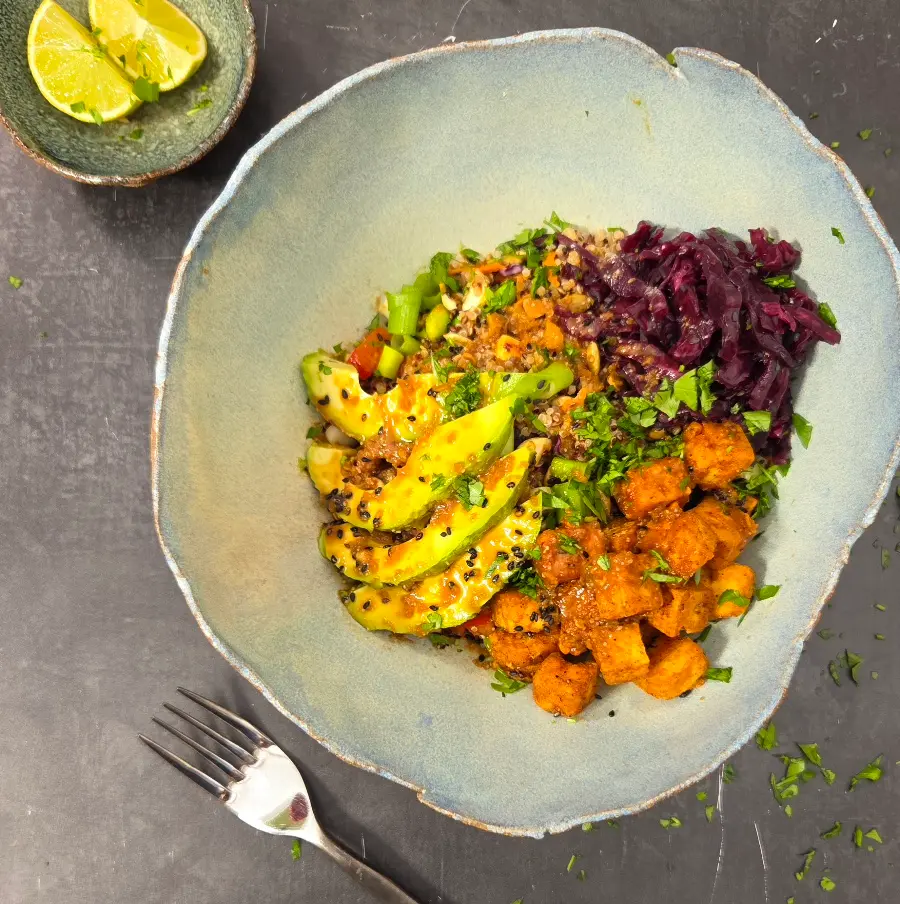
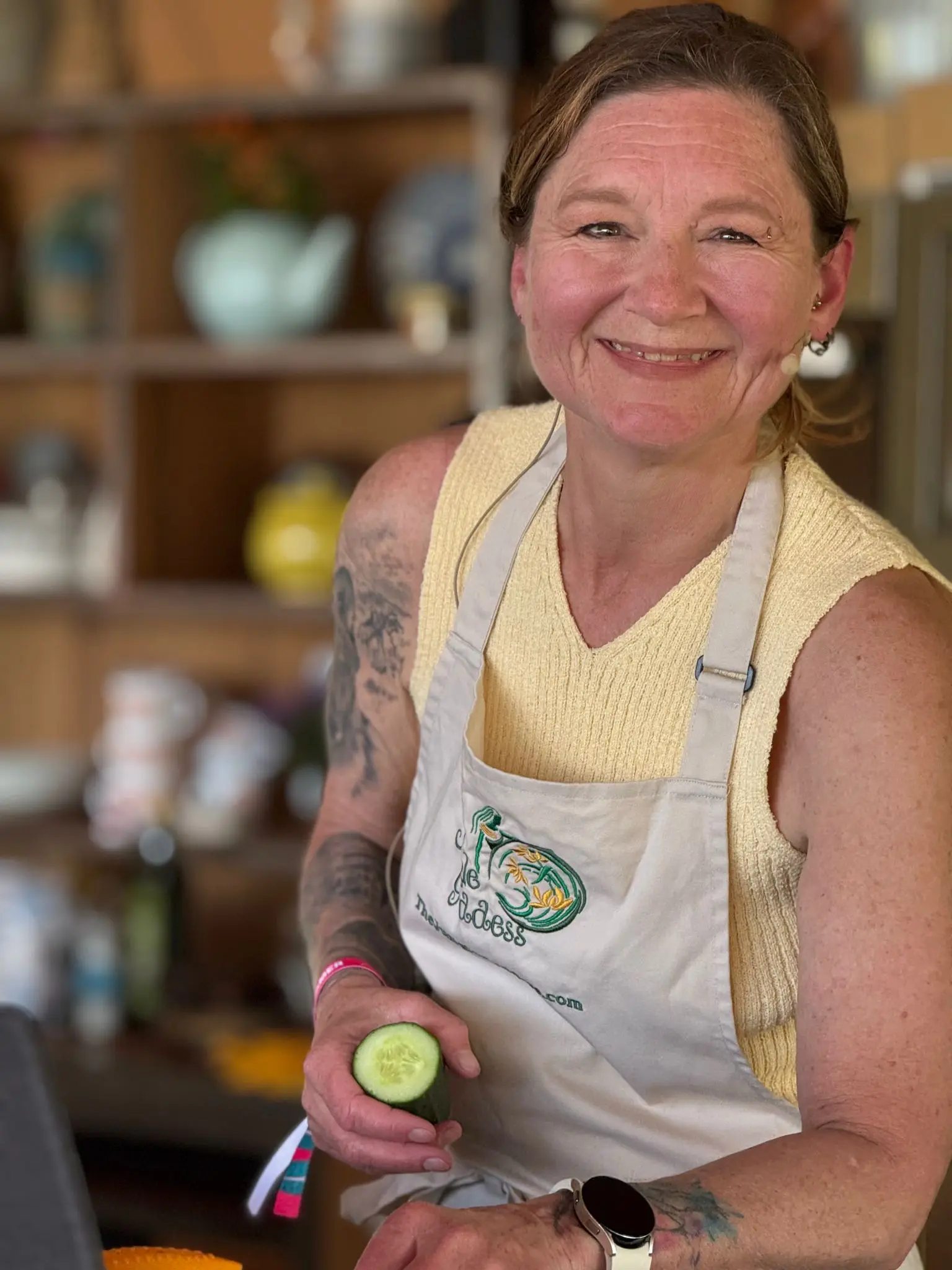
This dish was the centrepiece of my talk at Big Retreat Festival — every ingredient chosen deliberately, every element of the plate working toward the same goal:
Supporting the gut microbiome and hormone balance in midlife.
A few worth highlighting:
Tricolour quinoa — a complete protein and a source of slow-burning carbohydrate that won’t spike blood sugar
Ground flaxseed — the richest dietary source of lignans, which modulate oestrogen receptors in both directions
Red cabbage — cruciferous, supports oestrogen clearance in the liver
Sauerkraut — raw, unpasteurised, live bacteria that feed the estrobolome directly
Pumpkin seeds — zinc and magnesium, both involved in hormone production
Avocado — monounsaturated fats that hormone synthesis actually requires
The bowl is built around balance — slow-burning carbohydrate from the quinoa, plant protein from the tofu and edamame, healthy fats from the avocado and seeds, and fibre from every direction. Nothing is there by accident.
A note on soy:
Tofu and edamame both contain isoflavones — phytoestrogens that often raise questions in a perimenopause context. They don’t behave like endogenous oestrogen. They bind to receptors with far lower affinity and appear to modulate rather than add to circulating levels. In whole food form, the evidence is reassuring for most women.5 If you have a history of oestrogen-sensitive cancer, take individual guidance.
Phytoestrogens don’t add to oestrogen.
They help regulate it.
Try It Yourself
The Midlife Fusion Bowl brings everything together — fibre, fermented foods, phytoestrogens, healthy fats, plant diversity. Here’s how to make it.
Midlife Fusion Bowl

Equipment
- 1 Medium saucepan
- 1 Frying pan or air fryer
- 2 mixing bowls
- 1 knife
- 1 Grater
- 1 jar with lid (for dressing)
Ingredients
Base
- 100 g dried tricolour quinoa
- 1 tbsp ground flaxseed
Tofu
- 1 block firm tofu cubed and drained on kitchen towel
- 1.5 tbsp tapioca flour (or plain flour)
- 1 tsp garlic powder
- 1 tsp smoked paprika
- ½ tsp black pepper ground
Vegetables
- 1 medium carrot grated
- 150 g red cabbage finely shredded
- ½ red bell pepper diced
- ¼ cucumber finely diced
- 60 g edamame
Seeds and Nuts
- 2 tbsp pumpkin seeds toasted
- 2 tbsp cashews toasted
Dressing
- 1.5 tbsp tamari
- 1 tsp chickpea miso (or white miso)
- ½ lime juice
- 1 tsp maple syrup
- ½ tbsp sesame oil
- 1 tbsp warm water if required to losen
To Serve (per serving)
- ¼ Avocado sliced
- 1-2 tbsp sauerkraut
Garnish
- fresh coriander roughly chopped
- 2 spring onions finely sliced
- toasted black sesame seeds
- lime wedges
Instructions
- Cook the quinoa. Rinse 100g quinoa thoroughly under cold water. Add to a saucepan with 200ml water and a pinch of salt. Bring to the boil, reduce to a low simmer, cover and cook for 12–15 minutes until the water is absorbed and the quinoa is fluffy. Remove from heat, stir through the ground flaxseed, and set aside.
- Prepare the tofu. Press the tofu firmly to remove excess moisture — wrap in a clean cloth and press for at least 5 minutes, or use a tofu press. Cut into cubes. Toss with tapioca flour, garlic powder, smoked paprika and black pepper until evenly coated.
- Cook the tofu. Heat a little oil in a frying pan over a medium-high heat. Cook the tofu for 3–4 minutes each side until golden and crispy. Alternatively, air fry at 200°C for 15 minutes, shaking halfway. Set aside.
- Prep the vegetables. Grate the carrot, finely shred the red cabbage, dice the pepper and cucumber. If using frozen edamame, cook according to packet instructions and drain.
- Toast the seeds and nuts. Toast pumpkin seeds and cashews in a dry pan over a medium heat for 2–3 minutes until lightly golden. Watch them — they catch quickly.
- Make the dressing. Add tamari, miso, lime juice, maple syrup, sesame oil and warm water to a jar. Seal and shake well until the miso is fully dissolved. Taste and adjust — it should be savoury, slightly sharp, with just enough sweetness to balance.
- Assemble. Divide the quinoa between bowls. Arrange the tofu, vegetables, seeds and nuts on top. Add sliced avocado and sauerkraut on the side. Drizzle with dressing.
- Garnish. Finish with fresh coriander, spring onion, black sesame seeds and a wedge of lime.
Notes
- Make it faster: Prep the vegetables and dressing while the quinoa cooks and the tofu crisps — everything runs in parallel.
- Tofu tip: The drier the tofu before coating, the crispier the result. Pressing for longer (up to 30 minutes) makes a noticeable difference.
- Sauerkraut: Keep it raw and unpasteurised to preserve the live bacteria — the probiotic benefit is lost in heating.
- Dressing: Make a double batch and keep in the fridge for up to a week. Works well on salads, noodles and roasted vegetables.
- Quinoa: Cook a larger batch and refrigerate — it keeps well for 3–4 days and makes assembly much faster.
The Bigger Picture
A single bowl won’t rebalance your microbiome. But the way you eat consistently — over weeks and months — will shape it. The gut microbiome is adaptable. It responds to what it’s given. And in perimenopause, when the hormonal transition is already placing demands on the body, giving it the raw material it needs to regulate oestrogen is not a small thing.
If your gut health has changed in perimenopause — or if you’re managing symptoms that don’t seem to respond to the obvious things — the gut is worth looking at more closely. It may be doing more hormonal work than you realise.

If you’d like to understand what’s driving your specific symptoms, book a free Gut Conversation. It’s a 30-minute call — no commitment, no agenda beyond getting to the root of what’s going on.
Leave a Comment
References
- Baker JM, Al-Nakkash L, Herbst-Kralovetz MM. Estrogen-gut microbiome axis: Physiological and clinical implications. Maturitas.
- Peters BA, Lin J, Qi Q, et al. Menopause is associated with an altered gut microbiome and estrobolome, with implications for adverse cardiometabolic risk. mBio.
- McDonald D, Hyde E, Debelius JW, et al. American Gut: an Open Platform for Citizen Science Microbiome Research. mSystems.
- Wastyk HC, Fragiadakis GK, Perelman D, et al. Gut-microbiota-targeted diets modulate human immune status. Cell.
- Messina M. Soy and Health Update: Evaluation of the Clinical and Epidemiologic Literature. Nutrients.
Jungle-Trained. Science-Informed.
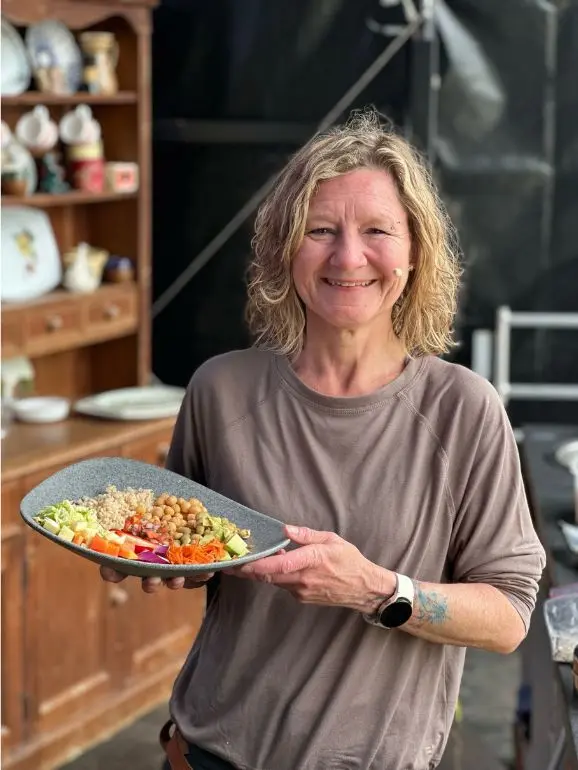
Nikkie Windsor UKIHCA-RHC
Integrated Nutritionist & Breath Coach
Gut issues stealing your freedom? I help mid-life adults get to the root of unpredictable digestion, stress-driven symptoms, and low energy — through nutrition, nervous system regulation, and breathwork.
I live with Crohn’s disease, so I know what it means to plan your life around your gut. And I know what it takes to stop.
Book a free Gut Conversation to explore your symptoms and map out your next steps.
Nikkie Windsor UKIHCA-RHC
Nutritionist, Health Coach & Breathwork Facilitator
Jungle-Trained. Science-Informed.
I help people navigating midlife move from gut chaos, low energy and overwhelm to steady digestion, resilient energy and confidence in their bodies again.
Book a personalised strategy call to explore your gut symptoms, energy and stress patterns — and map out your next steps.
Are You Ready to Change Your Gut Story?
You don’t have to manage this alone. Take the first step to feeling better today.
0 Comments